

Blog
Swimming Without Shoulder Pain
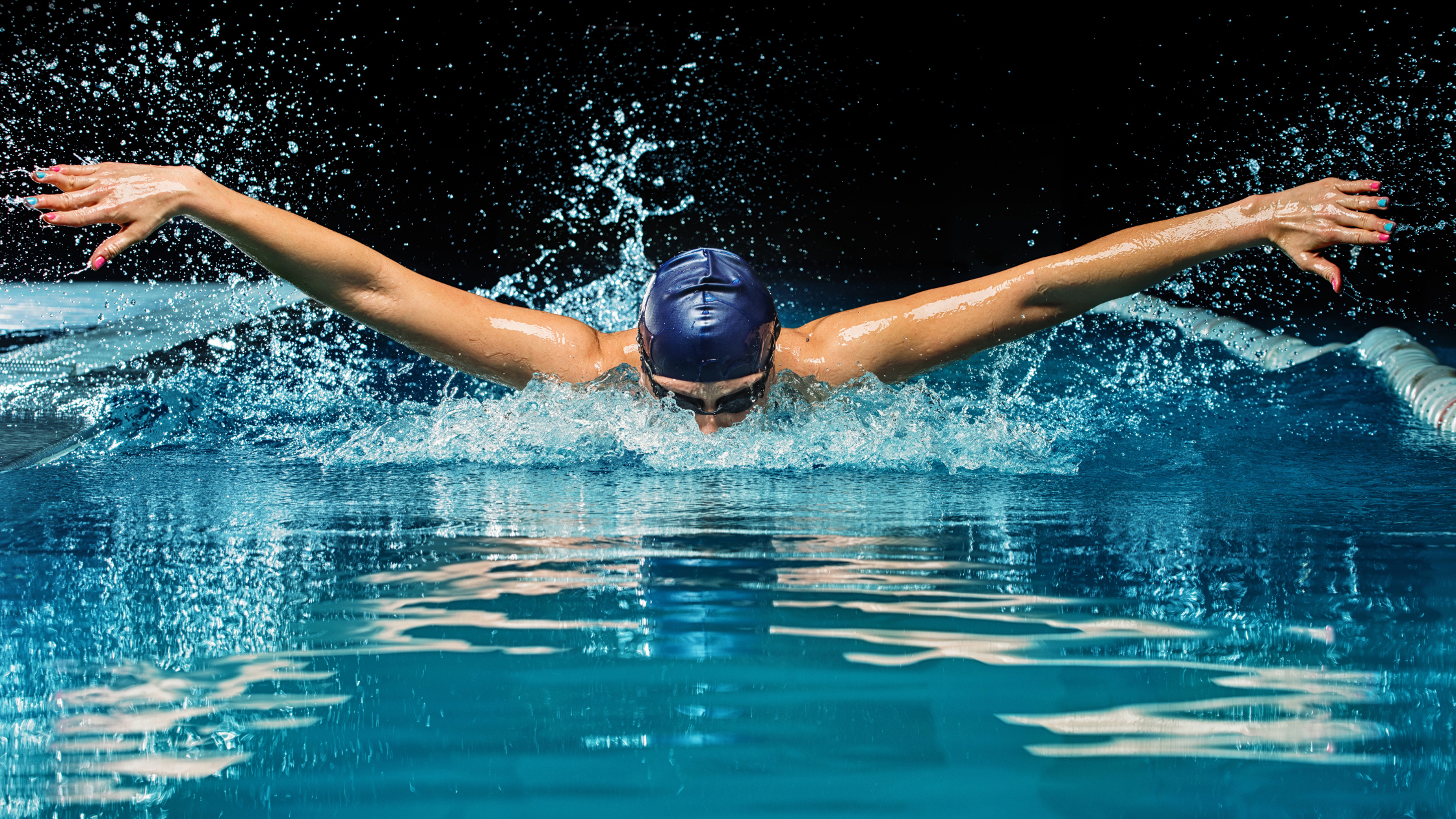
Warm weather is finally here, and with that burst of sunshine comes pool season! Swimming is one of the best full-body exercises you can do, but you can start to develop an injury from overusing your muscles as with any repetitive motion. In this case, the most prominent injury swimmers encounter is ‘Swimmer’s Shoulder.’
What is Swimmer’s Shoulder?
Swimmer’s Shoulder results when the tendons of the rotator cuff muscles become irritated or inflamed, leading to weakness in the arms, decreased motion in the shoulder, and ultimately pain while swimming or participating in any activity that requires overhead movement.
While swimming incorporates many muscles, the biceps, tendon, and rotator cuff muscles, specifically the supraspinatus, take the brunt of the force. Luckily, irritation and impingement can be counteracted by performing exercises that help stabilize the shoulder blades and strengthen the muscles around the shoulder. The most crucial factor in avoiding shoulder injury is swimming with the correct technique and gradually building up the time or distance. A qualified swimming professional or experienced swimmer can assess your stroke and highlight mistakes.
Investing in goggles can often avoid unsteady head movements when trying to prevent water in the eyes. If comfortable, allows the head to be in the water to decrease the strain on the shoulders during freestyle. Breaststroke is an excellent option for people who are limited in overhead motions allowing movement below 90 degrees. Remember to keep the head in alignment with breaststroke, not hyperextend, prevent straining the neck, and don’t bring arms too far behind you; tuck arms in close to your body.
Additional precautions include avoiding overuse of swim paddles, putting extra strain on the shoulders, and not over-using a kick-board with outstretched arms, as it puts the shoulders in a weak position. However, you can build up to using fins, boards, and paddles as your strength and endurance improve.
Swimming is a healthful activity that works most of the muscles in the body, especially if you do a variety of strokes. It can develop general strength, cardiovascular fitness, and endurance. If you avoid over-training and use proper technique in the water, you can enjoy swimming for a lifetime. Remember – never eat a big meal before you swim, and always stretch your arms before swimming.
4 Easy Exercises to Combat Swimmer’s Shoulder
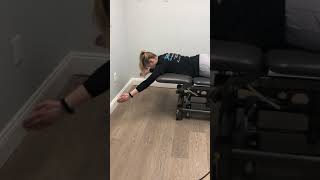
Try these simple exercises to prevent Swimmer’s Shoulder and to strengthen your muscles. If you continue to experience shoulder pain, you should immediately contact a physical therapist for an evaluation so you can begin a personalized rehabilitation program!
- Seated or Standing Rows:
Sit or stand facing the therabands or cable attachment. Pull the hands towards your chest, bending the elbows as you squeeze the shoulder blades together. Hold 2 seconds. Then slowly release the arms back to the starting position. 1 rep. Repeat 20 times, 3 sets total. Building up to 3 x 1 min, with a 30-second rest between sets or until fatigue.
- Standing Double Arm External Rotation:
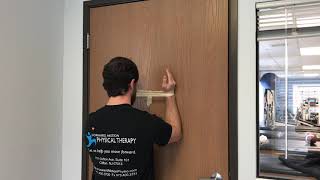
Holding a resistance band in front of you with both hands, move your hands away from the body, keeping your elbows tucked close to your side and pinching your shoulder blades together. Slowly bring your hands back in front of you, relaxing the shoulder blades. That’s 1 rep. Repeat 20 times, 3 sets total. Building up to 3 x 1 min, with a 30-second rest between sets - Plank Hand Step-Ups:
Assume a push-up position with your hands in front of a low step or box. Your body should form a straight line from your shoulders to your ankles, keeping your core tight. Move one hand at a time up onto the step and then back down again. That’s 1 rep. Repeat 10 times, 3 sets total.
- Quadruped:
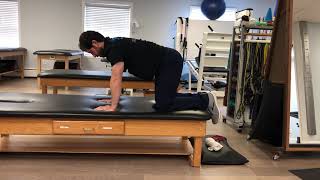
When performing this exercise, you will strengthen muscles in the arms, hip, lower back, and abdominal region and foster strength development between the two sides of your body. Once you’ve achieved the proper starting posture, simultaneously lift your left arm and right leg – straightening them out, so they are parallel to the floor. Hold in this position for a second, making sure you maintain a flat back, then return to the starting position and change sides.
We can help!
If you, or someone you know, has Swimmer’s Shoulder, please give us a call and schedule a visit to see one of our therapists. If you would like to learn more about shoulder pain, come to one of our free Shoulder Pain Workshops that we host once a month . Call our office at 973.400.3730 and ask to sign up for our workshop, as seating is limited. Check out our YouTube channel for shoulder exercises.