

Experiencing foot pain? Is it difficult to walk, exercise, or socialize due to this discomfort? It’s really no surprise. Your feet are some of the hardest working parts of your body. Every day, they serve as shock absorbers and buffer up to one million pounds of pressure as you traverse the world. Moreover, they support one and a half times your body weight when you walk, run, or jump.
Approximately 75 percent of Americans will contend with ankle and foot pain at some point in their lives, and if you’re one of them, you know how difficult management can be. Fortunately, you don’t have to be in agony any longer. Physical therapy can help treat the symptoms associated with sprains, strains, and more. Call us today to find out how.
What is Ankle and Foot Pain?
In short, ankle and foot pain refers to discomfort in the web of bones, ligaments, muscles, and tendons that comprise the foot or ankle. It can impact any area between your toes to your Achilles tendon at the back of your heel and can be long-lasting, in short bursts, or sporadic.
If you’re dealing with such pain, any pressure put on the foot can exacerbate the irritation. Running, jumping, walking, or stretching only amplifies the tenderness, which is an overwhelming motivator for people to pursue treatment.
Causes of Foot and Ankle Pain
Home to one-quarter of the bones in the human body, the foot boasts an impressive number of sensitive spots. There are 26 bones, 33 joints, and more than 100 tendons, ligaments, and muscles in your tootsies, making the likelihood of injury tremendous. From footwear to inflammation, and from injuries to certain medical conditions, your feet are susceptible to pain with nearly every decision you make. And where your foot is involved, so too is the ankle. The foot and ankle go, well, hand in hand.
It’s no wonder then that foot injuries are incredibly common. A misstep, a sudden fall, a sharp object underfoot, and you could suddenly be in a lot of pain.
Here is a short list of some of the most common causes of foot pain:
- Tendinitis
- Stress fractures
- Strains
- Sprains
- Septic arthritis
- Rheumatoid arthritis
- Raynaud’s disease
- Peripheral neuropathy
- Osteoarthritis
- High heels and poorly fitted shoes
- Gout
- Diabetic neuropathy
- Bursitis
- Broken bone
- Bone spurs
- Achilles tendon rupture
- Achilles tendinitis
-
I can’t say enough good things about Forward motion Physical Therapy. Hanna is an amazing physical therapist. She is knowledgeable, compassionate, and truly invested in her patients’ progress. She takes the time to listen and explain everything. She’s … More a great teacher.
I’m a fairly complex case, and Hanna has been incredibly thoughtful in her approach. In just two weeks, I’ve already made so much progress, and I truly believe that’s a reflection of her expertise, encouragement, and dedication. She makes every session positive and motivating, and I ALWAYS leave feeling more confident about my recovery.
I also had the opportunity to see Victoria for one of my sessions, and she was wonderful as well! It’s clear that the entire team is committed to providing excellent care. All of the physical therapy aides and assistants are incredibly kind, helpful, and knowledgeable, and they help create a welcoming and supportive environment. 🤍
My experience at Forward motion Physical Therapy has been outstanding, and I highly recommend Hanna and the entire team to anyone looking for exceptional physical therapy care. I wish I would have found them sooner! 🙏🏻


How Physical Therapy Helps Foot and Ankle Pain
Armed with a skilled physical therapist and a willingness on your part to actively participate in treatment, you can experience a significant decrease in foot pain and eliminate the majority of problems that people have with their feet and ankles. While there are a variety of home remedies, chronic or debilitating pain warrants a trip to a specialist.
In the realm of physical therapy, a person’s walking pattern is a window into their condition. It serves as a means for physical therapists to ascertain your level of functioning and determine if treatment is working. As such, you can expect a quick evaluation of your walk at every appointment. This will help direct the course of diagnosis and treatment.
Along with this essential element of treatment, a physical therapist will use a variety of tools to help alleviate your pain. This may include soft tissue massage/Graston Technique/ART, stretching techniques, manual manipulation, Class IV laser, and different exercises to help build strength and restore mobility while reducing pain.
In addition to the above techniques, your physical therapist may also recommend specialized footwear. Though many of us seek out soft shoes, this tendency plays a huge role in our discomfort. Well-developed orthotics can make a significant difference in your level of foot and ankle pain, and your physical therapist can recommend the most suitable option for you.
Foot
Bunionectomy
A bunionectomy is a surgery to remove bunions. A bunion is an enlargement of bone or soft tissues around the joint at the base of the big toe and results in a bump forming. Common causes of bunions are wearing too-small shoes, high heel shoes, and conditions such as arthritis. Surgery will be recommended if conservative treatments such as physical therapy, properly fitted shoes, and NSAIDs do not work. Depending on the severity of your bunion(s), the surgery and recovery time could vary greatly. There are three types of bunionectomy procedures: Akin Osteotomy for mild bunions, Chevron Osteotomy for moderate bunions, and Scarf Osteotomy for severe bunions.
After surgery, you’ll need to keep your foot elevated with a wedge pillow, use crutches, a wheelchair, and will need to keep your foot in a boot for a few weeks (depending on which type of bunion surgery you had). Physical therapy and exercise are recommended to strengthen, restore range of motion to the foot, and regain stability. Your bones will heal within 6 to 8 weeks, but it can take up to 6 months before you can do things like running again. Complete healing time can take up to 1 year in some cases if your bunion is more severe.
Achilles Tendon Repair
The Achilles tendon is a strong tendon that connects your calf muscles to the heel of your foot. The Achilles tendon is a vital part of the body and is why we can walk, run, and jump. This is the largest and strongest tendon of the body, but it can tear or rupture. It can tear due to a sudden and powerful force. The tear or rupture can happen during physical activity if you suddenly move faster or strangely pivot your foot. A ruptured Achilles tendon can cause pain and swelling near your heel, and you might not be able to bend your foot downward. Tendinitis can also cause the Achilles tendon to degenerate over time. Tendon repair surgery is almost always recommended for a ruptured Achilles tendon. Still, in some cases, your healthcare provider might suggest treating with pain management first or keeping your foot in a case temporarily to prevent your leg from moving. During Achilles tendon surgery, your surgeon will likely take a tendon from another part of your leg or foot to repair your Achilles tendon.
After surgery, your foot will likely be in a splint with a cast or a boot. Your foot will need to be stabilized for 6 to 12 weeks, but it will take several months until you have complete control of your foot, leg, and ankle. It will take 4 to 6 months before you can do intense activities such as sports, but consult with your physical therapist before engaging in any sports. Physical therapy and exercise are recommended to strengthen, restore range of motion to the foot, ankle, and leg, and regain stability.
Turf Toe
Surgery is generally not needed for Turf Toe and can be treated with physical therapy and anti-inflammatories. For Grade 1 Turf Toe, RICE (Rest, Ice, Compression, and Elevation) is recommended for this injury. Your doctor may also prescribe orthotic insoles for your shoes. For a Grade 2 Turf Toe injury, your doctor may prescribe a walking boot for a week or two in addition to the same care you would do for Grade 1 Turf Toe. For Grade 3 Turf Toe, surgery may be needed. You will need to wear a boot for an extended period, or you may even need a cast to keep your foot in the proper position. Physical therapy will also be beneficial for you to help stretch and strengthen the big toe. If all conservative options don’t work, surgery will be the next step. The surgical procedure and healing time will vary from person to person.
Ankle
Ankle Fracture
Typically if you break an ankle, you’re not allowed to put your foot down or put weight on it for six weeks. Once your ankle is stable, your physical therapist will start loosening stiff bones and stretching ligaments and tendons. However, if you break your ankle in 2 or more places, it will determine whether or not you need surgery and how long you will be in a boot. The severity of your injury will also determine whether or not you need surgery. If you need surgery on your ankle due to having two or more breaks in it, your surgeon will likely perform an ORIF (Open, Reduction, and Internal Fixation) to stabilize and heal broken bones. After the surgery, physical therapy is recommended to restore the range of motion and strengthen your foot and ankle
Ankle Exercises
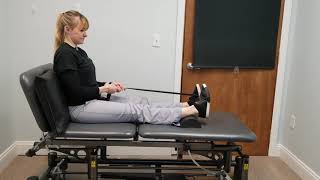
Ankle Sprain Exercises
Plantar Fasciitis


Enter your information and sign up for a free screen today!
Free screens are 15 minute assessment to see if you are a candidate for physical therapy.